Stories / The service visit / story 12 of 18
R-22, R-410A, R-32: reading the plate
R32 refrigerant is classed as lower flammability under ISO 817, which Daikin calls the lowest risk of the flammable classes, and your AC's nameplate or manual names the gas it takes, the only one that should go in.
From The AC in Your Flat. Updated 4 November 2026.
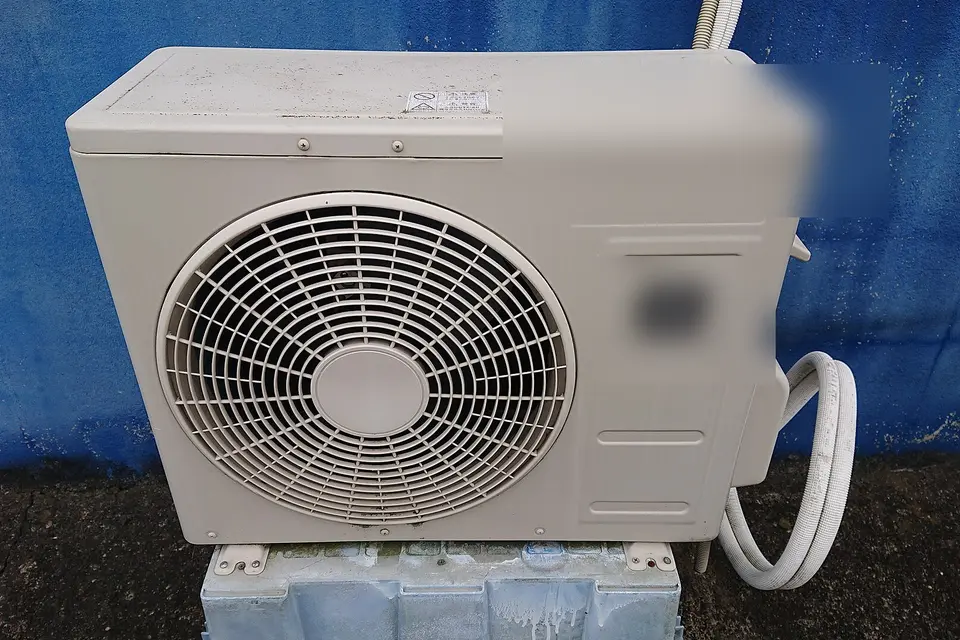
The gas type is printed on the unit's rating plate and normally in the manual. Use the manual, the bill or the indoor unit's label, or ask the technician. Never lean out to read a plate.
What do the gas names mean?
Daikin's R-32 page sets out the ISO 817 classes: R-410A sits in Class 1 with no flame spread, and R-32 sits in Class 2L, lower flammability, with a burning speed under 10 cm per second. Daikin, which sells R-32 units, says this makes it non-explosive if ignited. That's the maker's claim, so read it as such. Daikin's table also puts propane, the gas also called R-290, in Class 3, higher flammability, so if your plate names it, that's one more reason to leave handling to trained people. Business Today's explainer warns separately about fake and unauthorised gases, and says substandard gas can make a leak more dangerous.
| Gas | ISO 817 safety group | Warming figure (IPCC 4th report, via Daikin) | What you may see |
|---|---|---|---|
| R-22 | Not on Daikin's table | Higher than R-32, says Daikin | Older units; being phased out |
| R-410A | A1 | 2090 | Many units of recent decades |
| R-32 | A2L | 675 | Many current split ACs |
Is R-22 going away?
Yes, on a set schedule. A 2017 report on India's plan says that under the Montreal Protocol India must complete its phase-out of HCFCs, the family R-22 belongs to, by 2030. If you have an old R-22 unit, the gas may get harder to find, and that's worth factoring into a repair decision.
Can you switch an old AC to a new gas?
Don't. The EPA says plainly that there's no drop-in replacement for R-22, and alternative gases won't work well without changes to the system. Daikin India's manuals say not to use a refrigerant other than the one on the outdoor unit. If a technician offers to change the gas in your old AC, ask for it in writing and check with the maker.
What to do
Yours to do
- Find the gas type in the manual or on the bill and note it down.
- Ask the technician to name the gas before adding any, and keep the bill.
- Suspect a refrigerant leak from the AC? Ventilate and switch off at the MCB.
Leave to the trained person
- All handling of refrigerant, and any decision on repair or replacement.
Also asked
Is R32 dangerous in my bedroom?
Class 2L means it can burn under some conditions. Daikin says its burning speed is low and that its risk is the lowest of the three flammable classes. Have it fitted and serviced by a trained person, and don't use flames near a suspected leak.
What does the warming figure tell me?
How strongly the gas warms the air if it escapes, compared to CO₂. Daikin quotes 675 for R-32 and 2090 for R-410A, using an older IPCC report. It's one more reason to stop leaks.
Where this came from
- Daikin, R-32 refrigerant: ISO 817 classes, warming figures
- Business Today, 29 May 2026: Fake gases
- Energetica India, 14 November 2017: HCFC phase-out schedule, as reported
- US Environmental Protection Agency, homeowners FAQ: No drop-in replacement (US)
- Daikin India, room AC operation manual: Use only the gas on the unit, Daikin India manual
This story rests on those pages, opened or checked by 4 November 2026, and on no tests of our own. Maker pages speak for their makers, and rules and wiring differ by building, so check your own manual.