Stories / Power and bills / story 17 of 18
Stabilisers and power cuts
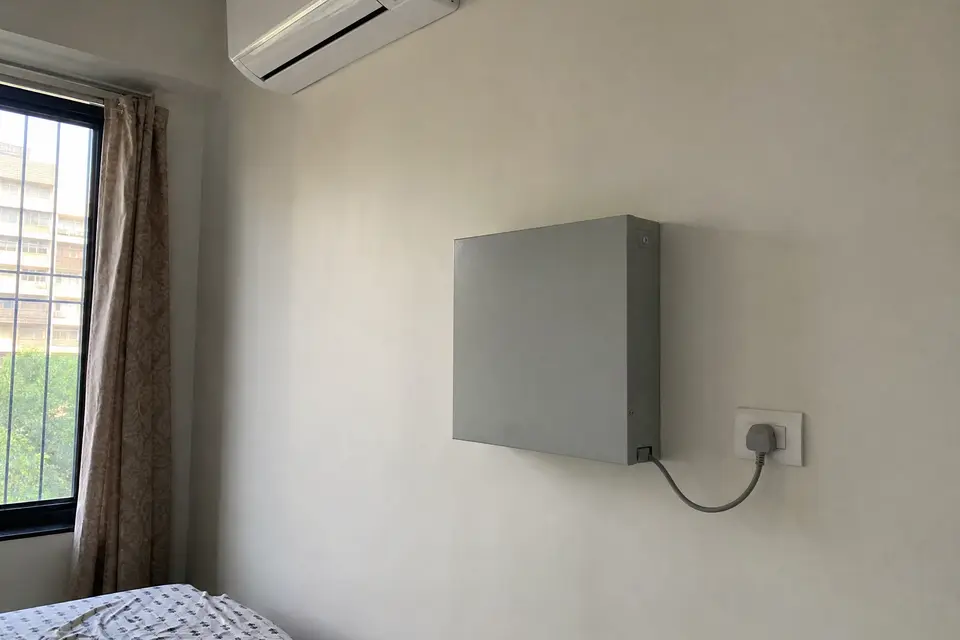
A voltage stabiliser for an inverter AC is often not needed where the supply stays inside the model's stated range, but check your manual, because some units and some areas still need one, and an electrician can measure your supply.
From The AC in Your Flat. Updated 4 November 2026.
Older fixed-speed ACs had a narrow voltage range. Onida's maker blog puts it around 180 to 250 V and says most inverter ACs since 2018 cope with about 140 to 290 V. That's one maker writing about its own range, so don't apply it to your unit without checking.
Does your inverter AC need a stabiliser?
Check the operating voltage in your unit's manual, then compare it with your supply. Onida says an external stabiliser may still be worthwhile where voltage regularly falls below 140 V or goes above 290 V, which it says is more usual in rural or industrial areas. It also says a stabiliser draws 30 to 100 W and adds ₹1,500 to ₹4,200 a year. Those are a seller's figures, so test any you rely on.
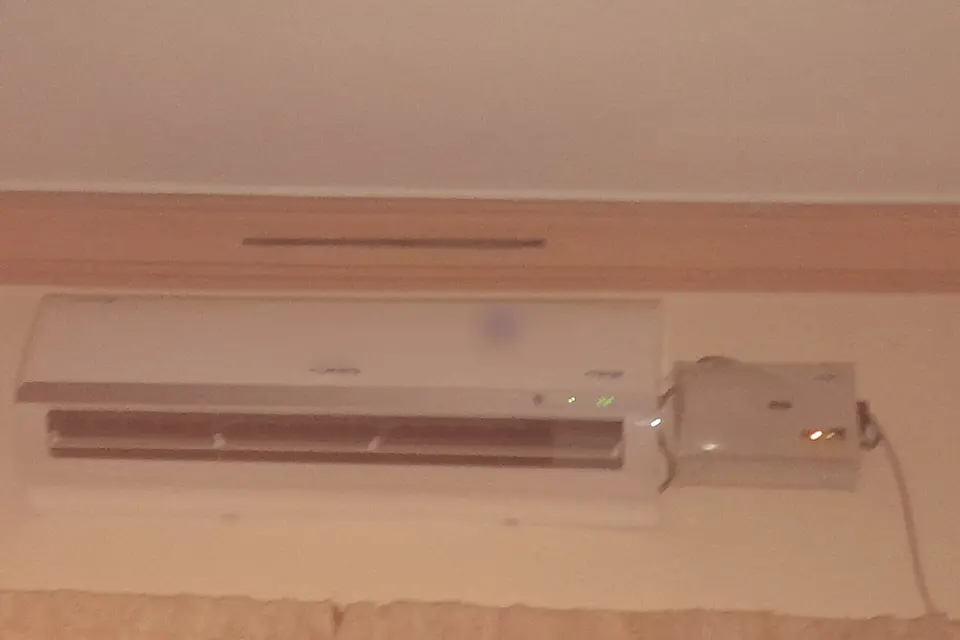
Makers aren't uniform. A Daikin India FAQ says a customer's stabiliser goes between the power point and the outdoor unit, a connection for an electrician or installer to make, while an older Daikin manual says one isn't needed. Read the document for your model. If your warranty mentions it, follow the warranty.
What happens when the power cuts out?
Most units just stop. Daikin says that when voltage fluctuates heavily, operation can stop to protect the AC, and it restarts by itself in about three minutes. It also says a unit won't start right after being stopped or switched mode, and that you should wait about three minutes. If it doesn't return, check the breaker and whether there's power elsewhere.


Should you use a surge protector?
Ask an electrician about protection for your supply. Your society's electrician may know about voltage swings in the building. Central Electricity Authority advice, as reported, asks consumers to stay within the sanctioned load and check that wiring can handle it.

What to do
Yours to do
- Find the voltage range in your manual, and keep the page.
- Note how often the AC trips or stops, and when.
- Wait about three minutes before restarting after a stop.
Leave to the trained person
- An electrician can measure your supply and advise on stabilisers, surge protection and earthing.
Also asked
Does a stabiliser protect from lightning?
Don't count on it. Ask an electrician about protection, and consider switching off at the MCB in a severe storm.
My AC trips every time the geyser is on. Why?
You may be near your load limit or sharing a circuit. Don't keep resetting it. Ask an electrician. See the MCB story.
Where this came from
- Onida, AC with or without a stabiliser: Voltage ranges and running-cost claim
- Daikin India, FAQs: Stabiliser wiring position, Daikin India FAQ
- Daikin, troubleshooting: Stops, restarts, three-minute wait
- SolarQuarter, 10 July 2026, on the Central Electricity Authority advisory: Sanctioned load, as reported
This story rests on those pages, opened or checked by 4 November 2026, and on no tests of our own. Maker pages speak for their makers, and rules and wiring differ by building, so check your own manual.